

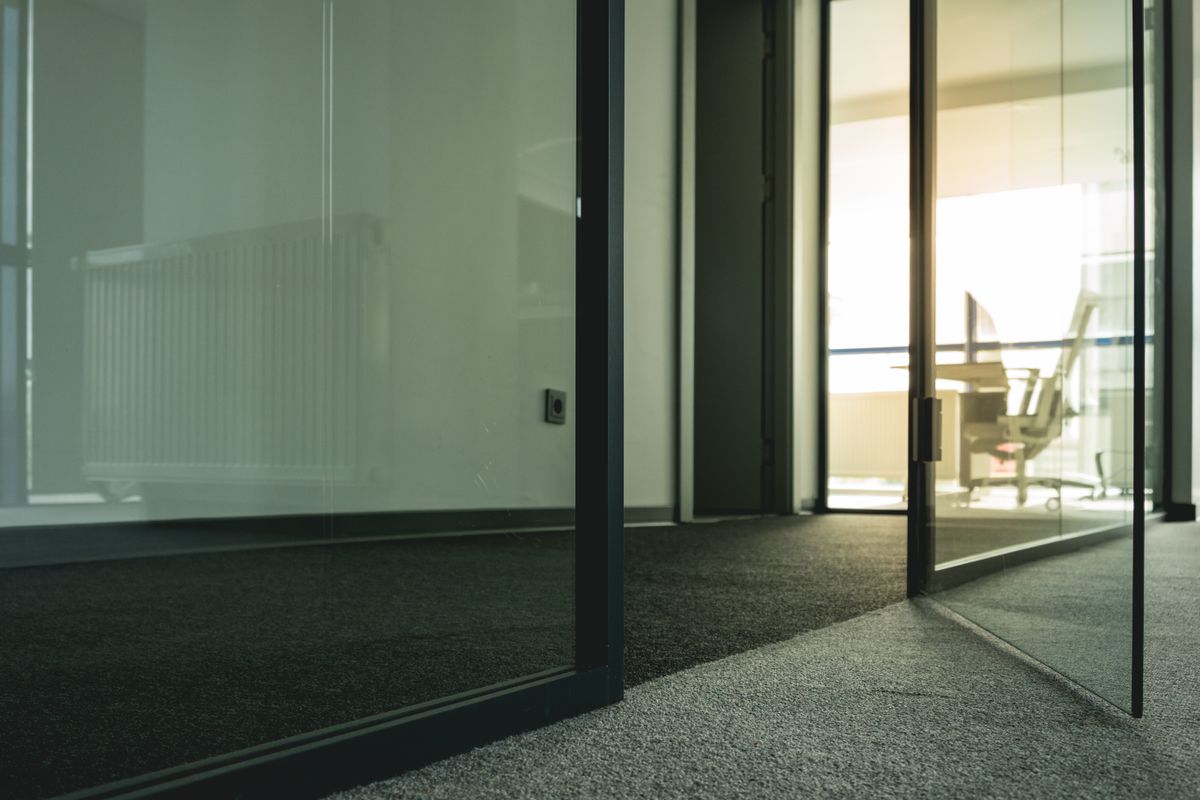
Storefront Doors That Sag: Why Your Lock Stopped Catching
Closing time on a commercial block usually looks the same: the gate coming down, the last customer walking out, someone patting their pockets for keys. Then the door won’t lock. Not won’t open — won’t lock. The key turns, the mechanism moves, and the bolt just will not seat. I’ve stood at that glass door with a restaurant manager already dialing a locksmith off an ad, expecting to hear the lock needed replacing. It didn’t. The door had dropped about a quarter inch on the hinge side, and the bolt was aiming at a strike plate that had quietly moved out of its way.
I’m Mykhailo. I handle commercial lock calls for FixMate Locksmith across the city, and this is one of the most common misreads a shop owner makes about their own front door. Storefronts are narrow-stile aluminum doors — thin metal frames built to hold as much glass as the design allows — and they age in a specific, predictable way. The lock is almost never the first thing to actually fail. It’s usually the last.
“My Lock Broke” Is Rarely the Real Diagnosis
Every narrow-stile door is a compromise. The stiles — the vertical bars of aluminum on either side of the glass — stay thin because a storefront door is supposed to read as window, not frame. That means the door carries real weight (a full sheet of tempered glass is heavier than it looks) through a small amount of metal, hung on pivots or a pair of hinges sized for the door when it was new — not for the door ten summers later.
When a shop owner calls and says the lock stopped catching, or the key turns but nothing happens, or someone’s started leaning a shoulder into the door to get it shut, I already have a guess before I’ve looked at the lock. Something moved. Not the lock. The door around it.
Why Storefront Doors Sag in the First Place
The Glass Has to Hang on Something
Every narrow-stile door hangs off two or three contact points — a bottom pivot, a top pivot, or a pair of continuous hinges — and every one of those points is a wear part. Bushings wear. Pins wear. Play develops between parts that used to fit tight. None of that happens overnight; it happens across tens of thousands of open-and-close cycles — a bussing cart through the door forty times during a dinner rush, a hand truck of deliveries every morning, a door that gets let go instead of guided shut. Over a few years, the door stops hanging plumb. It rotates slightly at the hinge side, and the far corner — the lock corner — drops.
That drop is small. A quarter inch, sometimes less. But a deadlatch or a hookbolt is a precision part meeting another precision part, the strike or keeper set into the frame, and a quarter inch is enough to turn that meeting from clean to missed.
Fasteners Loosen Long Before Anyone Notices
The screws holding hinges, pivots, and closer arms into an aluminum frame — or an old wood buck behind it — don’t fail all at once. They back out a turn at a time, cycle after cycle, faster on a door that gets muscled shut instead of guided shut. By the time a screw is loose enough to see or hear, the hardware around it has usually already been running slightly out of true for months.
Heat Doesn’t Cause the Sag — It Exposes It
This is the part that surprises most owners: the door didn’t start failing in July. It just stopped hiding the problem in July. Aluminum expands as it heats, and a door that was already tight on tolerance in spring binds harder against a frame that’s expanding right along with it. A reveal gap that was forgiving in March can disappear in a heat wave. The sag was there all year. Summer just spends the last quarter inch of slack.
How the Failure Actually Cascades
Here’s the part that turns a simple alignment issue into a real repair. A door closer doesn’t know the door has dropped. It’s a spring or a hydraulic arm doing exactly what it was set to do — pull the door shut at the same speed and the same force, every time. A sagging door doesn’t swing shut square anymore; it swings shut on a slight angle, and the closer slams it into the frame corner-first instead of guiding it flush.
That impact happens right at the latch. Every closing cycle, the deadlatch or hookbolt strikes metal instead of gliding into the keeper opening. It’s a small collision, repeated dozens of times a day, and it’s the reason a door that was merely misaligned in spring is genuinely eating locking hardware — a worn bolt, a cracked keeper, a cylinder that’s absorbed months of shock — by fall. The lock didn’t start this. It’s usually the last part to actually break, after the door and the closer spent a season hammering on it together. We go deeper into that closer-driven cascade in our piece on door closers in NYC buildings, where the closer is doing its job exactly right and still causing the damage.
It’s the same diagnostic trap as an intercom buzzer that won’t release a door in the middle of winter — a failure we broke down in our piece on buzzer systems and winter failures. The symptom points at the electronics. The actual fault is mechanical. On a storefront door in July, the symptom points at the lock. The actual fault is a hinge that’s been quietly wearing since the day the door went in.
What a Locksmith Actually Checks, and in What Order
This is a sequence, and it matters that it stays a sequence — jumping straight to the lock is how a shop ends up paying to replace hardware that was never actually broken.
- Pivots and hinges, first. Check for play, worn bushings, a bent pin. This is where the sag starts, so it’s where the fix starts.
- Alignment, second. Does the door hang plumb? Is the reveal — the gap between door edge and frame — even from top to bottom? The door gets reset or shimmed here, before anything downstream is touched.
- The strike, third. Once the door hangs correctly, does the strike or keeper actually line up with the bolt path? Sometimes the plate needs to move a few millimeters — not the whole frame.
- Lock hardware, last. Only after the first three are right do I check whether the deadlatch, hookbolt, or cylinder is actually worn, damaged, or due for replacement.
That order — pivots, alignment, strike, then hardware — is routine commercial locksmith work, not a guess. It’s also the difference between a repair that holds and one that fails again in a few months, because new hardware bolted into a door that’s still sagging just restarts the same cascade.
Worth separating two different calls here. A door sagging from age and weight is a different job from a door that got bent or pried during a break-in — we covered that scenario on its own in our guide to storefront door repair after a break-in, where the diagnosis starts from impact damage, not wear. And if your storefront door doubles as a required exit for staff or customers, it may carry panic hardware with its own rules, separate from the sagging issue here — our panic bars and egress basics guide covers that system on its own terms.
When Repair Isn’t the Honest Answer
Most sagging storefront doors can be corrected: new pivots, a reset frame, an adjusted strike, and the door closes the way it did the day it went in. But not always. If the frame itself has racked out of square beyond what shimming can fix, if the bottom rail has corroded or rusted through, or if the door keeps re-dropping within weeks of being adjusted, the honest call is a new door — not another round of adjustment. I’d rather tell an owner that plainly than keep billing for fixes that won’t hold. If you’re not sure which side of that line your door is on, that’s usually a quick look, not a guess — reach out and we’ll tell you what we actually see.
A Seasonal Checklist for Shop Owners
Most of this is preventable, or at least catchable early, without hiring anyone — whether you own the building or lease the storefront as a commercial tenant.
- Check the reveal gap once a season. It should be even along the whole edge — top, middle, and bottom. A gap that’s wider at the top than the bottom means the door has already started to drop.
- Listen to the door close. One clean sound means it’s still aligned. Two slams, or a scrape before the click, means it’s on its way to becoming a lock problem.
- Don’t force the roll-down gate against a door that hasn’t fully seated. A door left open even a hair stresses the gate track the same way a sagging hinge stresses the lock.
- Skip the instinct to oil the lock. If the door is dragging, spraying the cylinder doesn’t fix anything — it just delays someone noticing the actual cause.
- Get pivots and hinges looked at before the heat arrives, not after. Summer doesn’t create the sag; it just stops letting the door hide it.
- If staff have started using a shoulder or a hip to close the door, treat that as the cascade above already starting, not a quirk of the building.
A door that needs muscle to close is already telling you what’s wrong. The lock is just the last part of it willing to admit it.
Written by Mykhailo — NYC DCWP-licensed locksmith, FixMate Locksmith. Serving all five boroughs, around the clock.
Door drags, lock misses, and closing time keeps getting longer?
Request a quote · Commercial locksmith service
Price named and confirmed before any work starts. No surprises at the door.