

Panic Bars and Egress Basics for Small Businesses
The back door of a small business leads a double life. From nine to nine it is an emergency exit: it must let every person in the building out, instantly, in the dark, in a panic, with no key and no instructions. At night it is a security door: it must let no one in. Most of the hardware confusion we see in shops, restaurants and small offices across the city comes from trying to serve both jobs with the wrong equipment — or with the right equipment, modified into the wrong one.
This is a hardware guide, owner to owner, about how exit devices actually work. One honest boundary up front: fire and building code compliance in New York is its own discipline, and the final word on what your specific occupancy requires belongs to your architect and the city’s fire authorities. What follows is the locksmith’s half of the conversation — the metal, the mechanics, and the mistakes.
What a panic bar is, and why it is shaped like that
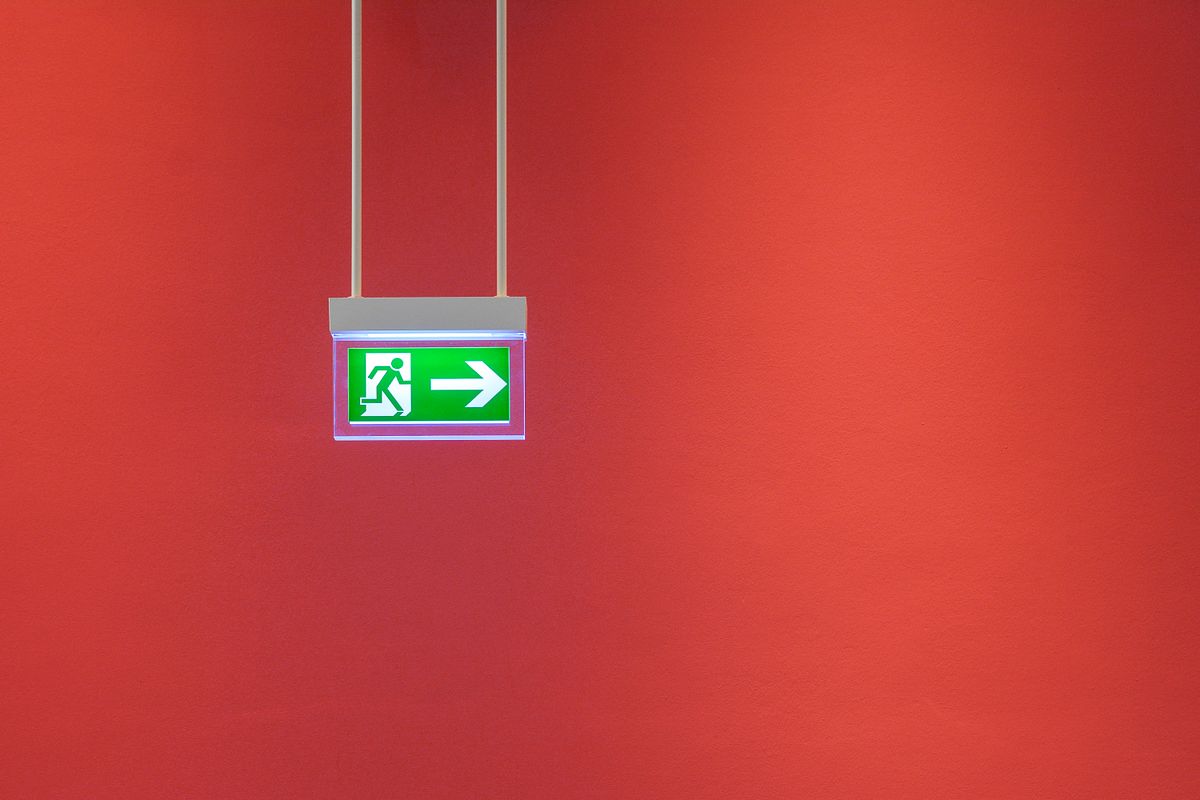
A panic bar — exit device, crash bar, push bar — is a horizontal bar across the inside of a door that retracts the latch when pushed. Not turned, not pulled, not operated with a key: pushed, by a hand, a hip, or a crowd. The design is written in old tragedy — a century of fires taught that people fleeing a building will press against a door, and the door has to answer that press by opening. One motion, no knowledge, no key, no strength. That is the entire philosophy of egress hardware, and every rule about it follows from that picture of a crowd in the dark.
The core rule: egress is always free
While people are inside, the path out operates with nothing — no key, no code, no second motion. That single principle disqualifies a whole catalog of improvisations we still find on service calls: the double-cylinder deadbolt added above a panic bar “for security,” the padlocked chain looped around the bar after a rough month, the delivery rack parked against the back door. Every one of these turns a life-safety device into furniture, and every one has a hardware alternative that achieves the security goal without touching the way out.
How a panic door still locks — legitimately

The trick is realizing the two jobs live on two sides of the door. Outside, an exit device can carry keyed trim — a cylinder that controls whether the outside lever or pull works at all. Inside, the bar always opens. After close, with the building empty, the outside trim is locked and the door is exactly as secure as its cylinder, latch and frame deserve — which is why the cylinder on a back door should be the same high-security grade as the front, not the forgotten cousin.
Two more legitimate tools round out the kit. Dogging holds the latch retracted during business hours so the door swings freely both ways — flip it back at night and the latch works again; a device with lost or broken dogging is how shops end up with a back door that simply does not latch all day. And an exit alarm — the “emergency exit only, alarm will sound” package — keeps a rarely-used egress door honest: anyone can leave, but not silently. For staff-heavy back doors, that alarm is usually the difference between an exit and an unofficial employee entrance.
Matching the device to the door
- Single steel or wood door: a rim device — the workhorse, surface-mounted, latching into a strike on the frame. Simple, sturdy, serviceable.
- Aluminum-and-glass storefront door: usually a concealed or mid-panel device made for narrow stiles; the housing has to respect the thin frame, and the cylinder work ties into the storefront’s existing hardware.
- Pairs of doors: vertical-rod devices that latch top and bottom, so each leaf secures independently without a fixed mullion — or with a removable mullion where deliveries demand the full opening. Putting two rim devices on a pair and hoping is a classic misfit we get called to rescue.
- Special cases: delayed-egress and alarmed devices exist for shrinkage-sensitive retail, but they live under stricter rules and belong in a code conversation, not a catalog impulse.
Where small businesses go wrong
The same handful of failures shows up on call after call. The chain and padlock after closing — usually installed the week after a break-in scare, usually still there when an inspector or worse arrives. The wedge or the stock shelf that “temporarily” blocks the door and stays for a year. The broken dogging pin that leaves the latch retracted around the clock, so the secure door is secretly just a door. The alarm with a dead battery that everyone stopped hearing months ago. And after an actual break-in attempt, all attention goes to the wounded front door while the back door that failed quietly keeps its old habits — we wrote about that tunnel vision in our storefront break-in guide.
None of these are exotic. They are all the same mistake wearing different clothes: solving a security anxiety by degrading a life-safety device, instead of fixing the security properly on the outside of the door.
A word on buzzers, maglocks and access control
Sooner or later somebody proposes wiring the back door into the building’s access control — a keypad, a fob reader, a magnetic lock. It can be done well, and it is done badly all over the city. The unbreakable requirement does not move: whatever electronics hold the door, egress stays one motion and fail-safe, which is why maglocks on exit paths come wrapped in strict rules about release hardware and what happens when power drops. If the building already runs an intercom or buzzer system, the back door should join that conversation deliberately, not as an afterthought bolted on by whoever sold the reader — our intercom repair and upgrade guide covers how those systems age and integrate. Electrified exit trim, which locks and unlocks the outside lever while the inside bar stays purely mechanical, is very often the cleaner answer than a maglock — same access control, none of the life-safety gymnastics.
The five-minute monthly check
Once a month, walk to every exit door and spend one minute each. Push the bar: the door opens in one motion, no sticking, no shoulder. Let it go: the closer shuts it fully and the latch clicks home on its own. Flip the dogging on and off if you use it. Trip the alarm on purpose so you know it still screams. Look at the frame and strike for new damage. Anything that hesitates goes on the list for your commercial locksmith — exit hardware lives a hard life, full of cart impacts and slammed closes, and it fails gradually, then suddenly. If the door itself is racked or dragging, that is a door and frame conversation before it is a hardware one.
A back door with the right device, the right cylinder, working dogging and a live alarm is a solved problem — it keeps the crowd safe at two in the afternoon and the inventory safe at two in the morning, and it never makes you choose between the two. That is the whole assignment, and it is very achievable hardware.
Written by Mykhailo — NYC DCWP-licensed locksmith, FixMate Locksmith. Serving all five boroughs, around the clock.
Back door doing double duty?
Request a quote · Commercial locksmith
Price named and confirmed before any work starts. No surprises at the door.