

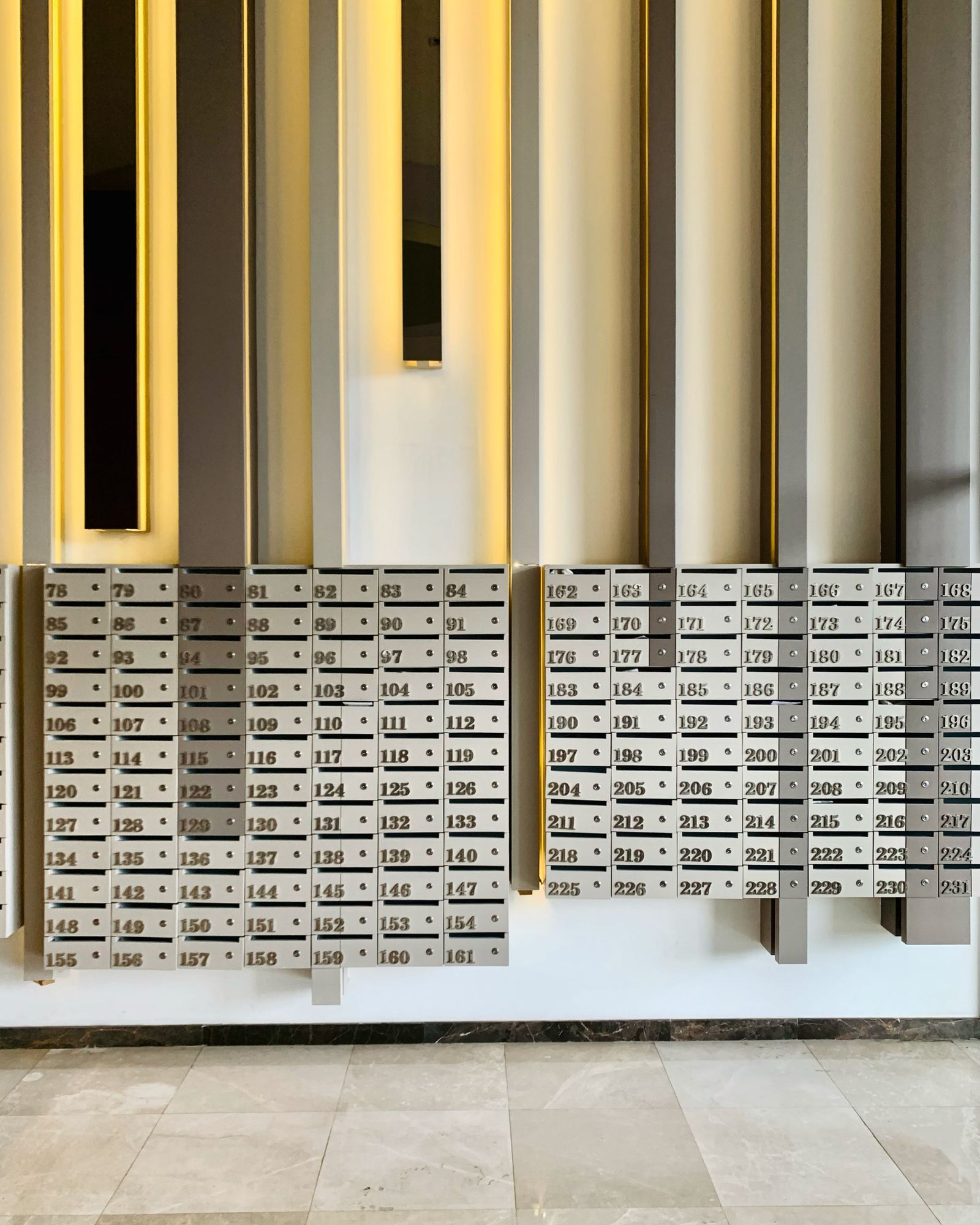
Mailbox Locks in NYC Buildings: Lost Keys, Broken Locks, and Who’s Responsible
The mailbox lock is the one nobody thinks about — until the little key snaps off in the cylinder, or a tenant hands over an apartment key ring with a strange, mismatched mailbox key on it, or a whole wall of compartment doors won’t turn no matter how carefully someone works the key. I get calls about mailboxes almost as often as front doors, and almost every one starts the same way: “I didn’t even know this could break.”
It can, and in a building with dozens of units and years of tenant turnover, it usually does. Here’s how mailbox locks actually work in New York buildings, who’s on the hook when one fails, and what a locksmith can — and legally can’t — do about it.
If a mailbox lock has just failed on you, the order of operations matters more than speed:
- Figure out which lock failed — your compartment’s small cylinder, or the wide panel lock the letter carrier uses.
- If it’s the carrier panel, tell building management — only USPS can service that lock, and management files the request.
- If it’s your compartment, loop in the landlord or manager before swapping anything.
- If the door is pried or mail is missing, photograph it and report to both management and USPS before any repair.
The mailbox setups you’ll actually find in NYC
Walk into ten different buildings and you’ll see three basic layouts. The most common in mid-size and larger buildings is a lobby wall of compartment mailboxes, arranged in horizontal or vertical banks — a grid of small doors, one per unit, each with its own cylinder lock. Older walk-ups, especially pre-war buildings, often still carry the original brass single boxes mounted individually near the entry, sometimes decades old and rekeyed more times than anyone kept track of. And in newer developments or buildings that redid their entryway, you’ll see cluster box units, or CBUs — the freestanding or wall-mounted USPS-style units with a bank of individual compartments and one larger master compartment for parcels.
Different hardware, same failure points: worn cylinders, keys cut one generation too many times, doors that get pried at, and locks nobody has touched since the building changed management.
The one lock I can’t touch — and why
This is the part most tenants and even some property managers don’t know, and it’s worth saying plainly: every bank of mailboxes has two different locks doing two different jobs, and only one of them is mine to work on.
The larger master lock — often called an arrow lock — is what the letter carrier uses to open the whole panel and load mail into every compartment at once. That lock, and the mechanism behind it, is USPS property. It stays USPS property even though it’s mounted in a privately owned building. No locksmith, including me, is permitted to pick, repair, rekey, or replace an arrow lock. If that master lock fails, jams, or gets damaged, the fix runs through the Postal Service, not a service call. Building management typically has to file a request with the local postmaster or USPS facilities unit to get it serviced.
The individual tenant compartment lock is a different animal entirely. That small cylinder is building or tenant hardware, not USPS equipment, and it’s exactly the kind of lock a locksmith can open, repair, or replace. I’ve had tenants apologize for calling me about “the mail thing” as if it’s outside what I do — it isn’t. It’s a lock like any other, just a smaller one.
The arrow lock stays USPS property even inside a privately owned building. No locksmith is permitted to touch it — and anyone who offers to should worry you.
Mykhailo, FixMate Locksmith
Who’s actually responsible for it
In a rental building, providing a working mailbox and a working lock on it generally falls to the landlord as part of giving tenants reasonable access to their mail — it’s treated the same way a broken buzzer or a broken entry lock would be. That said, I’m not a lawyer and lease terms vary, so if you’re a tenant dealing with a broken mailbox lock, the practical first step is telling management rather than arranging a swap yourself. Some buildings are fine with a tenant calling a locksmith directly and getting reimbursed; others want it routed entirely through the super or management office, partly so they can keep their own records straight on which unit has which lock and key.
In co-ops and condos, it usually sits with the shareholder or unit owner rather than a landlord, but the same logic applies — check the proprietary lease or house rules before assuming, and loop in the board or managing agent so the building’s records stay accurate. Either way, a quick message before a lock gets swapped saves confusion later, especially if the building ever needs to track down who has which mailbox key.
| Situation | Who handles it |
|---|---|
| Lost mailbox key | Locksmith — with the landlord or manager in the loop |
| Compartment lock worn, jammed, or spinning | Locksmith |
| Arrow (master) lock jammed or damaged | USPS only — management files the request |
| Box pried open after mail theft | Landlord for the hardware, plus a report to USPS |
| Whole mailbox panel outdated or failing | Building owner project, often with USPS sign-off |
What replacing a compartment lock actually involves
Mailbox compartment locks are almost always small cam locks — a compact cylinder with a rotating cam on the back that catches against the door frame. They come in a handful of standard sizes and depths, which is good news: most banks of boxes use the same lock across the whole wall, so matching one is usually straightforward once I know the make of the box unit.
People sometimes ask me to rekey a mailbox lock the way you’d rekey a front door, and honestly, for most cam locks it’s simpler to swap the whole cylinder than to open it up and rekey the pins. These locks are small, inexpensive to source, and not built with rekeying in mind the way a residential deadbolt is — so a straight swap gets a tenant new keys and a working lock in one visit, without extra steps that don’t buy much on hardware this size. Whichever way it’s handled, the tenant walks away with fresh keys, and management gets a clean record of what’s now on that box.
When a key breaks instead of the lock
Mailbox keys are thin, and thin metal fatigues. I’ve pulled broken key stubs out of mailbox cylinders more than once — the same problem as a key snapping in a front door lock, just on a smaller scale. If a key’s gotten stiff to turn or you’ve felt it flex before it goes in fully, that’s usually a warning sign before the actual snap. Worth mentioning to management before it becomes an “I can’t get my mail” situation on a Friday afternoon.
Worn locks, pry marks, and mail theft
Mailbox theft is a real problem in this city, and compartment locks are a common target simply because they’re small and mass-produced. Two things are worth watching for. First, a lock that’s gotten loose or sloppy over years of use — turning too easily, not fully engaging, or rattling in the door — is worth replacing before it fails outright rather than after. Second, any sign of physical damage around the lock or door edge — scratching, a bent flap, a door that no longer sits flush — should get reported to both building management and USPS. I won’t walk through how that kind of damage typically happens; the point that matters for a tenant or manager is recognizing it and acting on it, not the mechanics of it. If a building has had repeated issues, upgrading to a sturdier compartment lock is usually possible within the existing box design, and it’s a reasonable ask for management to make on behalf of the whole bank of tenants rather than one box at a time.
Where this becomes a property manager problem
For a single tenant, a mailbox lock is a small fix. For a building, it’s a tracking problem. Turnover season is when this shows up hardest — new tenants moving in, old keys not returned, and nobody quite sure which compartment lock still matches which name on the lease. I’ve walked into buildings where the mailbox wall has more mismatched, over-cut, or outright missing keys than the front door does. That’s less a single-lock issue and more a key control issue — the same discipline that applies to staff and unit keys applies here, just scaled down. If your building is already managing lock maintenance on a schedule, mailbox locks belong on that same list rather than getting handled one emergency at a time; see our notes on property manager lock maintenance for how that tends to work in practice.
Whether it’s one tenant with a snapped key or a management office trying to get ahead of turnover season, mailbox compartment locks are ordinary hardware with an ordinary fix — it’s just easy to forget they exist until the day they don’t work.
If you’re dealing with a mailbox lock that won’t turn, a key that’s stuck or broken off, or a building that needs several compartment locks replaced at once, that’s exactly the kind of call we take. It falls under the same residential locksmith work we do on front doors and interior locks — just smaller hardware. Reach out through our contact page and we’ll walk you through what’s needed before anyone shows up.
Quick answers
I lost my mailbox key — can you just open it?
Yes — with your ID, a lease or other proof you live there, and the landlord or management office in the loop. The compartment lock is ordinary hardware, and getting it open without damaging the door is routine work.
The key turns but the door won’t open
Usually that means the cam on the back of the cylinder has worked loose or snapped — the lock spins, but nothing moves the catch. That’s a straightforward swap, not a mystery, and it’s worth handling before the door gets forced.
Written by Mykhailo — NYC DCWP-licensed locksmith, FixMate Locksmith. Serving all five boroughs, around the clock.
Mailbox key gone or the compartment lock won’t turn? We can get you a working lock and a fresh set of keys.
Request a quote · Residential locksmith service
Price named and confirmed before any work starts. No surprises at the door.