

Smart Locks in NYC Rentals: What Tenants and Landlords Should Know
Smart locks are sold with a simple promise: never carry a key again. Tap a code, let the dog walker in from your desk, stop hiding spares in the hallway. For homeowners it is mostly a question of taste. For the roughly two-thirds of New Yorkers who rent, it is more tangled — because the door you want to modify is not entirely yours.
I install smart locks across the five boroughs and I also get called when they fail, which gives me a balanced view of the category. This guide covers what a tenant should sort out before buying anything, what a landlord should know before saying yes or no, and which hardware realities the packaging never mentions.
The renter’s dilemma: convenience vs. the lease
The convenience is real. Codes instead of copied keys mean you always know who can get in, and you can revoke access without collecting anything from anyone. If you have ever paid for a midnight lockout because your keys stayed on the kitchen counter, a keypad sounds like therapy.
The catch is that the lock lives in a door that belongs to the building. Swap hardware carelessly and you can violate your lease, annoy building management, and — the part people forget — lose track of the original cylinder you are contractually expected to restore when you move out. The good news: with the right approach you can usually have both convenience and a clean move-out.
Talk to your landlord first
New York housing rules have generally allowed tenants to add their own lock to the door, with the expectation that the landlord gets a duplicate key on request — and leases layer their own conditions on top of that. The details are not something to guess at from a blog post, ours included: this is not legal advice, so read your lease and, when in doubt, ask the city directly through NYC Housing Preservation & Development. What I can tell you from the field is that the conversation goes better when you arrive with a plan:
- Propose a retrofit, not a replacement. Several smart models replace only the inside thumbturn and leave the outside of the door — and the original key — exactly as they were. Landlords say yes to these far more often.
- Offer access. A code or a key for management, consistent with your lease, removes their main objection: getting into the unit in an emergency.
- Promise a clean restore. Keep the original parts in a labeled bag. Reinstalling them is a quick screwdriver job for any locksmith — as long as the parts still exist.
Keypad, Bluetooth, Wi-Fi: what actually differs
Marketing blurs these into one “smart” category, but they fail and succeed differently:
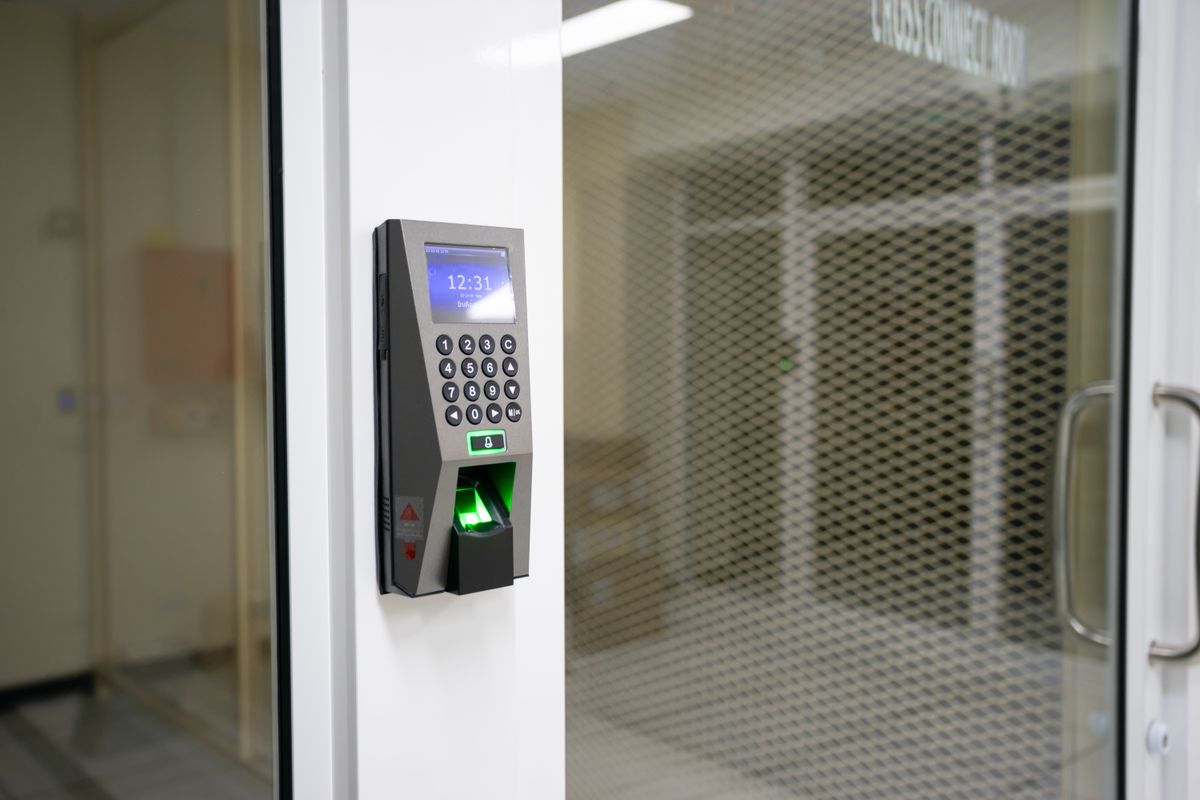
- Plain keypad deadbolts are the workhorses. No app required, codes punched in at the door, battery lasts the longest. For most rentals this is the sweet spot: all of the convenience, the fewest moving parts.
- Bluetooth models unlock when your phone is near. Slicker, but now your door’s reliability includes your phone’s battery and the lock’s mood on a cold morning.
- Wi-Fi models add remote unlocking and integrations. They are also the hungriest — radios eat batteries — and they inherit every quirk of your building’s wireless dead spots. Convenient, but you are signing up to administer a tiny computer bolted to your door.
A pattern worth noticing: each step up in connectivity adds a failure mode without adding much security. The bolt itself is the same class of hardware throughout.
A landlord’s view: why some buildings say no
When management refuses a smart lock, it is rarely stubbornness. Multifamily buildings have reasons that do not fit on a product page. Many run on a master key system, where every unit cylinder answers to a building key for emergencies — a consumer smart lock quietly breaks that scheme. Fire-rated doors are certified as an assembly, and some hardware swaps void the rating. Insurers ask questions after incidents, and “unauthorized modification to the entry door” is not a phrase anyone wants in a claim file. And supers have watched dead batteries turn into midnight drilling more than once.
None of this makes smart locks a bad idea. It means the buildings that welcome them tend to do it deliberately — approved models, registered codes, hardware that keeps the master system intact. If you are the landlord reading this, that list is your starting policy.
Battery life and failure modes nobody mentions
Every smart lock is a battery-powered device that stands between you and your bed. Respect that. Real-world batteries last months, not the years the box implies — colder hallways, heavy traffic, and chatty radios all shorten the number. The locks warn you long before they die, but the warnings are easy to ignore for exactly as long as it takes to become a story.
Before buying, check two things: whether the model keeps a mechanical key override, and what the emergency wake-up looks like (many take a 9-volt battery held to contacts under the faceplate). Then adopt the boring habit that prevents the whole genre of failure: change the batteries on a calendar date, not when the lock starts begging.
Installing without damaging the door (or your deposit)
Most NYC apartment doors are steel or steel-clad fire doors. That is good for security and unforgiving for amateur drilling — a hole in the wrong place is permanent, visible, and billable to you at move-out. Retrofit models that reuse the existing bore avoid the problem entirely; full replacements need the right measurements the first time (backset, door thickness, bore diameter — the details on the spec sheet everyone skips).
If the door itself is the problem — sagging, misaligned, a deadbolt that never threw smoothly to begin with — a smart lock will faithfully reproduce every mechanical fault with a motor behind it. Fix the door first; that is door work, not gadget work, and it is the difference between a lock that purrs and one that grinds.
When a good mechanical deadbolt still wins
Honesty time: plenty of renters do not need any of this. If your real worry is who has copies of your key — a previous tenant, an ex, a super from three supers ago — the cheaper, quieter fix is rekeying the cylinder you already have. If your worry is losing keys, a keypad earns its keep. If your worry is the door itself, no electronics will help.
A quality mechanical deadbolt has no batteries, no firmware, no app account to secure, and a service life measured in decades. The best setup I see in rentals is often hybrid: the original keyed deadbolt kept exactly as the lease expects, plus a landlord-approved retrofit for daily convenience. Our residential locksmith visits end with that configuration more often than with anything exotic.
Whatever you choose, choose it with the lease read, the landlord in the loop, and the original parts in a labeled bag on a shelf. Future you, standing at the move-out walkthrough, will be glad.
Written by Mykhailo — NYC DCWP-licensed locksmith, FixMate Locksmith. Serving all five boroughs, around the clock.
Thinking about upgrading your rental’s lock?
Request a quote · Residential locksmith service
Price named and confirmed before any work starts. No surprises at the door.