

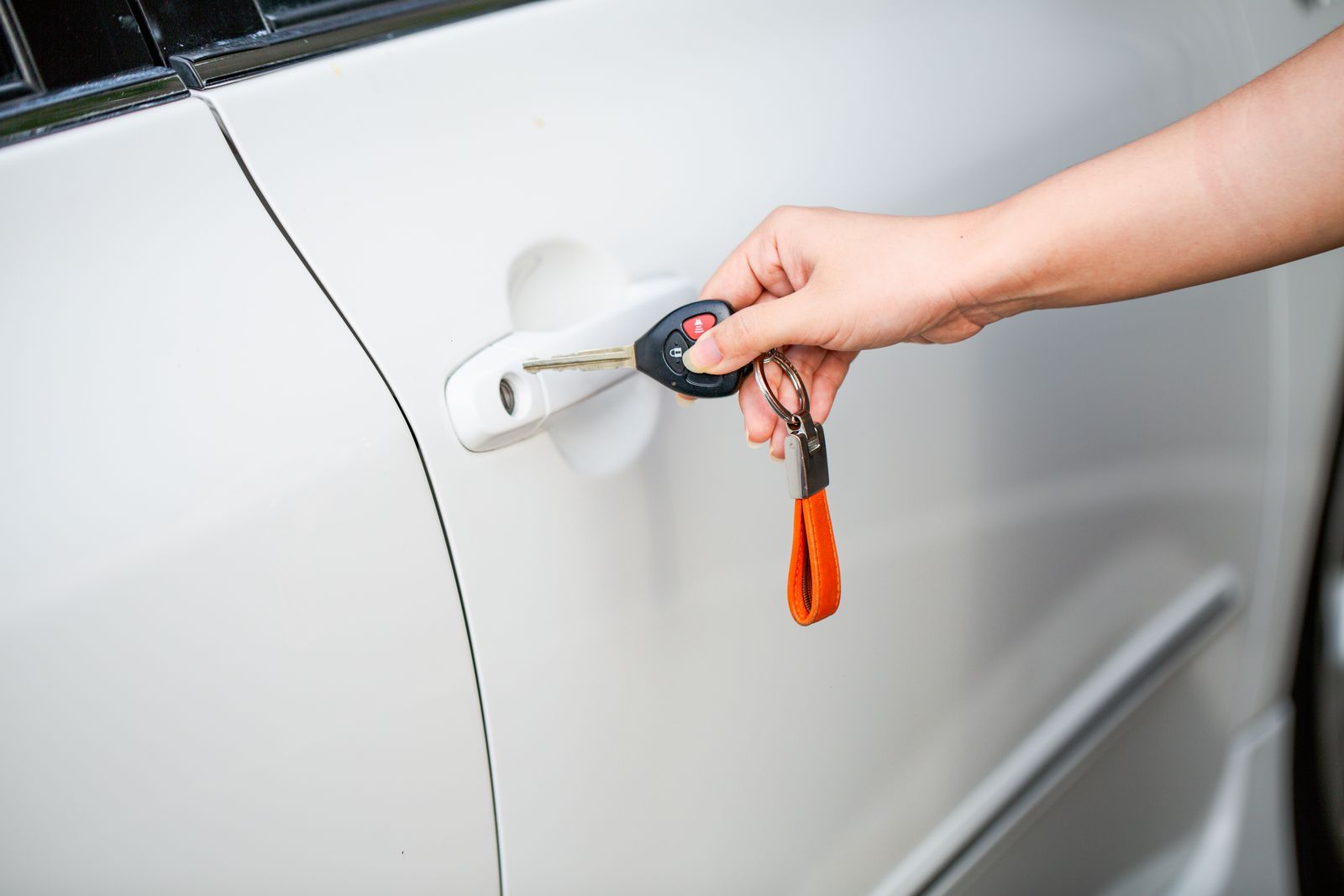
Car Key Replacement in NYC: Dealership vs. Locksmith
You pat your pockets twice, then the other pocket, then the couch cushions, and somewhere in that loop it lands on you — there was only ever one key. No spare in the kitchen drawer, no second fob a partner’s been carrying. Just the one, and right now you don’t know where it went. The next question is almost always the same: call the dealership, or call a locksmith? I get asked this several times a month, usually from someone standing next to a parked car with nowhere to be but somewhere to be, and the honest answer depends less on brand loyalty and more on what’s actually inside your ignition.
Sometimes the dealer genuinely is the right call. But most people never hear the honest version of that tradeoff — they just hear whichever answer the person on the phone wants them to hear. So here’s what I’ve learned doing this work in New York, car by car.
The Kinds of Car Keys You’ll Actually Run Into
“Car key” covers a wider range of hardware than most drivers realize, and which one you have decides almost everything about who can help.
Plain mechanical keys — no chip, no electronics — are mostly a pre-2000 story at this point, though a few older fleet and work vehicles still run them. Cut a blank, done. Then came transponder keys: a small chip embedded in the plastic head that talks to the car’s immobilizer, so a cut-only blank will turn the ignition but the engine won’t start until the chip is programmed to match. Remote fobs added buttons for locks and alarm on top of that same transponder function. Proximity or “smart” keys go further still — the car senses the fob in your pocket or bag and lets you push a start button with no key inserted anywhere. And laser-cut keys, sometimes called sidewinder keys, use a groove milled down the center of the blade instead of the zigzag edge cuts on a traditional key — they need different equipment to cut correctly, chip or no chip.
The key type is the single thing that determines whether your car gets sorted out today or sits waiting on a part.
What a Mobile Auto Locksmith Can Do on the Spot
A properly equipped mobile locksmith carries key-cutting machines and programming tools in the vehicle, which means the work happens where your car actually is — a garage, a driveway, a metered spot on Flatbush Avenue — instead of somewhere you have to get the car to. For most transponder keys and a large share of remote fobs, that means cutting a new blade and programming the chip to your car’s immobilizer in one visit.
Whatever the situation turns out to be, the call goes faster when you have a few things ready:
- Year, make, and model of the car
- The VIN — visible through the windshield at the dashboard corner, or on the door-frame sticker
- Proof of ownership: registration or title, plus your ID
- Where the car sits — street side, garage level, or a lot with restricted access
All-keys-lost situations — where there isn’t a second key anywhere to work from — are routine for an auto locksmith on most makes and model years. So is a broken key snapped off inside the ignition or door cylinder, which needs careful extraction so the lock itself isn’t damaged in the process — I’ve written more on that specific problem in a piece on a key breaking off in a lock, and the same extraction logic mostly carries over to ignitions. And if you’re simply locked out with the key sitting on the seat, that’s the fastest fix of the three — I won’t spend this article on lockout mechanics, since it’s a separate service in its own right, but it’s worth knowing it’s the same call.
The common thread: the car doesn’t move. You’re not arranging a tow, you’re not taking a day off, you’re waiting in the spot where the car already is.
When the Dealership Really Is the Right Call
I’d rather tell you this straight than pretend every job belongs to a locksmith. Some of the newest proximity and smart-key systems are locked to dealer-only programming tools by the manufacturer — no independent locksmith, however well equipped, can get in without that specific factory software. This is more common on certain European makes, and it shows up occasionally on very recent model years across other brands too, as automakers tighten who can touch the immobilizer system.
If your key situation is tangled up with an active recall, or the vehicle is still under a warranty that explicitly covers key replacement, that’s also a dealer conversation — a locksmith showing up and doing the work independently can complicate a claim that would otherwise cost you nothing. And for genuinely obscure or very new electronics a locksmith hasn’t encountered yet, the honest move is to say so rather than force it. A good locksmith will tell you plainly when your car needs the dealer instead of taking the job anyway and hoping for the best.
The Real Tradeoff: Time and Towing, Not Price
I’m going to skip the pricing comparison entirely, because it’s the wrong lens and it’s usually where the sketchier operators start playing games anyway. The tradeoff that actually matters is logistics.
Go the dealership route with no working key and you’re typically looking at getting the car towed there, the dealer ordering the correct key or fob for your VIN, and a wait while that part arrives and a service slot opens up — often a matter of days, not hours. A mobile locksmith skips most of that sequence by design: no tow, because the work happens at the car; no shipping wait, because the blank and the programming equipment are already on hand for the vehicles they cover. Any locksmith who leads with price instead of explaining the work is skipping the part that actually matters. If you want to see how pricing should be handled honestly before any work starts, I laid that out in a piece on pricing transparency.
| Mobile auto locksmith | Dealership | |
|---|---|---|
| Where the work happens | Curbside, wherever the car sits | The car has to reach the dealer |
| Tow truck needed | Usually not | Often, if no working key exists |
| Plain metal & transponder keys | Yes | Yes |
| Remote fobs | Most makes and models | Yes |
| Newest proximity keys | Some makes — confirmed up front | Yes, with dealer tooling |
| Typical wait | Same visit | Days when parts are ordered |
Watch Out for the “Car Key Guy” From a Classified Ad
This is where I get protective of my own trade, because it’s also where drivers get burned. There’s a specific pattern in this city: a bare-bones ad or a listing with a name and a phone number and nothing else, a quote given over the phone before anyone’s seen your car, and then a very different number once the work is half done and you’re stuck negotiating from a position where walking away isn’t really an option anymore. Sometimes it’s not even the same person who quoted you — calls get routed through a dispatch operation with no fixed shop, no real accountability, and no license behind the name.
In New York, locksmiths are required to carry a DCWP license, and it’s a two-second check before anyone touches your vehicle — ask for the number and confirm it, the same way you’d check a contractor before letting them into your apartment. I wrote a short guide on exactly how to verify one: how to check a locksmith’s DCWP license. Pair that with confirming they’re actually licensed, bonded, and insured, and you’ve eliminated most of the bad actors before they ever get near your car.
NYC Parking Doesn’t Wait for a Part to Ship
There’s a New York-specific wrinkle to all this that drivers in most other places don’t have to think about: alternate-side parking. If your car is street-parked and you’re suddenly without a working key, you’re not just inconvenienced — you’re risking tickets, or a tow to an impound lot, because the car has to move on schedule whether or not you can get in it. A multi-day wait for a dealer-ordered part is a much bigger problem when the car is sitting on Bedford Avenue than when it’s in a driveway in the suburbs. That pressure is a big part of why a same-day, come-to-the-car fix matters more here than the pricing debate does. Whichever borough you’re in — Manhattan, Brooklyn, Queens, the Bronx, or Staten Island — the calendar on your parking spot doesn’t pause for a shipping delay.
If you’re standing next to your car right now trying to figure out which of these two calls to make, the short version is this: check what kind of key your car actually uses, rule out warranty or recall complications, and if neither of those points you to the dealer, a licensed mobile locksmith can usually get you moving again without a tow or a days-long wait. We’ll tell you honestly if your car is one of the ones that needs the dealer instead — that’s not a sales pitch, it’s just accurate information, and it’s worth more to you than a quote given blind over the phone.
Quick answers
All keys lost — is that still doable?
For most makes, yes. All-keys-lost cutting and programming is standard mobile equipment at this point. A small set of the newest proximity systems still need dealer tooling — and if your car is one of them, you’ll hear that on the phone, not after a visit.
Do I need to be with the car?
Yes — with ID and proof of ownership. A licensed locksmith cuts keys to a vehicle only for its owner, and that check protects you as much as anyone.
Written by Mykhailo — NYC DCWP-licensed locksmith, FixMate Locksmith. Serving all five boroughs, around the clock.
Stuck by your car with no working key and nowhere to leave it parked?
Request a quote · Auto locksmith service
Price named and confirmed before any work starts. No surprises at the door.